
People’s lives are not immune to shocks – which can take the form of ecological, socio-economic, and even technological shocks. The internet, for example, is a double-edged sword; on one hand, it provides unlimited access to information, while on the other, it erodes cultural values. Highways are no different, drawing resources out from villages to cities while bringing in ‘empty calories’ to children. In Papua, pressure on forest ecosystems in the form of logging and large-scale plantations is starting to affect the communities, as felt in the decline in hunted game and limited access to clean water. In Jambi, fluctuations in the international prices of rubber, coffee, and cinnamon, exacerbated by rising prices of fossil fuel and agricultural inputs, show the fragility of commodity value chains and the vulnerability of affected farmers. The shocks led to changes in the relationship between the community and the environment.
In the framework of resilience thinking, shocks are external dynamics that emerge abruptly and significantly challenge the integrity and resilience of a system. This is different from stresses, which occur on a more continuous basis but at a lower intensity. Both are responded through either resistance (meaning that the system attempts to maintain its stability) or transformation (the system shifts into something new and more adaptive). This is then referred to as shock resilience vs transformative resilience (Dwiartama, 2016). The most important question to ask is: would these shocks and crises lead to something better, or worse, for the community? If the answer is the former, then the community, or social-ecological system, is said to be resilient.
There are at least four types of major shocks that we identified in the six villages in Jambi and Papua, with all their variants, which have indeed been felt by the communities and challenged their collective identity, economic stability, and ecosystem integrity. They are: (1) international price fluctuations, (2) external pressures due to development, (3) ecological shocks, including climate change, and (4) regeneration crisis and the seeping of digital technology.
International price fluctuations.
Although the six communities in Jambi and Papua only rely partly on commodity value chains in their livelihood strategies, we have to concur that their global value chain-related cash crops contribute significantly, not only to their income, but also to their social and political life as well. In Soaib, for instance, children often harvested cocoa beans for quick petty cash. In Durian Rambun, women farmers’ groups and gathering activities pivot around rubber plantation farmwork. The endless belt of coconut trees over the coast of Aruswar definitely plays both an ecological and socio-economic role for the community.
Cocoa plantation in Soaib that has been in the area since the 1950s, or rubber plantation that attracted the early settlers in Sungai Keradak in the 1940s, can be seen as the important crops that shaped the economy and social life of the populations. It is then logical that the volatile international price for these industrial crops contribute as a real shock to the system. The same holds true for other industrial crops, although of course not as strongly felt as the two. When the price of copra fell, for instance, people in Aruswar abandoned their plantation or looked for ways to bring added value to coconut. Likewise, a dramatic drop in the rubber price was responded harshly by farmers in Jambi, some even burned down their farms or replaced them with the likes of oil palm.
In Jambi, history shows how people juggled with their three main commodities (coffee, cinnamon, and rubber) in a way that enabled them to survive economic shocks. Rubber in Jambi was the first to be introduced, followed by cinnamon in the 1980s and coffee in 1997. However, in 20 years since the introduction of cinnamon, the price of cinnamon fell hard, leaving people neglecting their farms. This was followed by an increase in the international price of rubber between 2004 and 2014, which pushed farmers to steer back to rubber. After 2014, rubber price once again dropped, which serendipitously followed by another increase in cinnamon price. While other regions that relied solely on rubber became frustrated and shifted to the notorious oil palm, farmers in Durian Rambun, Tamiai, and Sungai Keradak could easily bounce back to cinnamon. This capacity to adapt through multiple cash crops built a form of resilience to this particular shock.
On a similar note, some of the more innovative farmers in Jambi and Papua came up with value adding activities. Soaib experimented with cocoa fermentation, Aruswar processed coconut into VCO, Sungai Keradak made powdered cinnamon as a supplemental beverage, while Tamiai and Durian Rambun created a branded packaged coffee. Although the market has not been well established for these innovative products, and only time will tell whether this will ever expand, this endeavour of creating new ways of working with biological resources (a term now known as biological economy) seems worth the shot.

External pressures due to development.
The stories of the six villages have illustrated that in their local social-ecological context, the communities are able to withstand various internal changes. However, when it comes to external pressures, the repercussions can become quite substantial for the system. In Papua, we notice at least two cases of external shocks that are quite massive in scale; both show a classic dilemma: while the massive extraction of resources brings an apparent impact on the ecology, they also arguably offer monetary benefits to the clans and communities in general. In the case of timber concession in Aruswar, one issue with this channelling of cash to the heads of clans is that no one can tell for sure whether it would then be distributed fairly to the larger community. Our informal conversations with women in Aruswar (those that were usually silent behind the men) revealed how they question the stream of capital running to the clan leaders. Resulting from this is an elite capture that leads to marginalization and social inequality. The same holds true with the development of oil palm plantation in Sawesuma, which was claimed to be a nuclear-plasma scheme. Where disbursing cash is the only thing that the clans feel, it is doubtful that an empowerment, which is key to social sustainability, ever even takes place. One clan leader addressed this issue in how he tried to convince other clan leaders to stop the encroaching plantation, only to find this to be futile.
In Jambi, the massive destruction of forest from land clearing is subjected to an adage of orang selatan, meaning the southern people. Looking at how the villages are situated just south of TNKS, it seems that the populations act as the protectors of the vast remaining forest in Jambi. Having said this, they see the southerners as poachers and illegal trespassers. People look at Palembangense (people from Palembang, the capital of South Sumatra province) with disdain. Our own field researcher, who was born and bred in Palembang, experienced such a frown at first, where kids asking their parents whether she is indeed a southerner. This may seem a matter of ethnic feud, but when we dig deeper into what a southerner means, we found that for some, it is a symbolism for anyone (be they individuals or companies) coming to impose economic development to the area. The story dated back in 1988 when a logging company was given a permit to operate in the nearby forest. Years later, this activity led to a huge flood in the village. Since then, the community stood up against the company and ensured that the permit would not be extended.
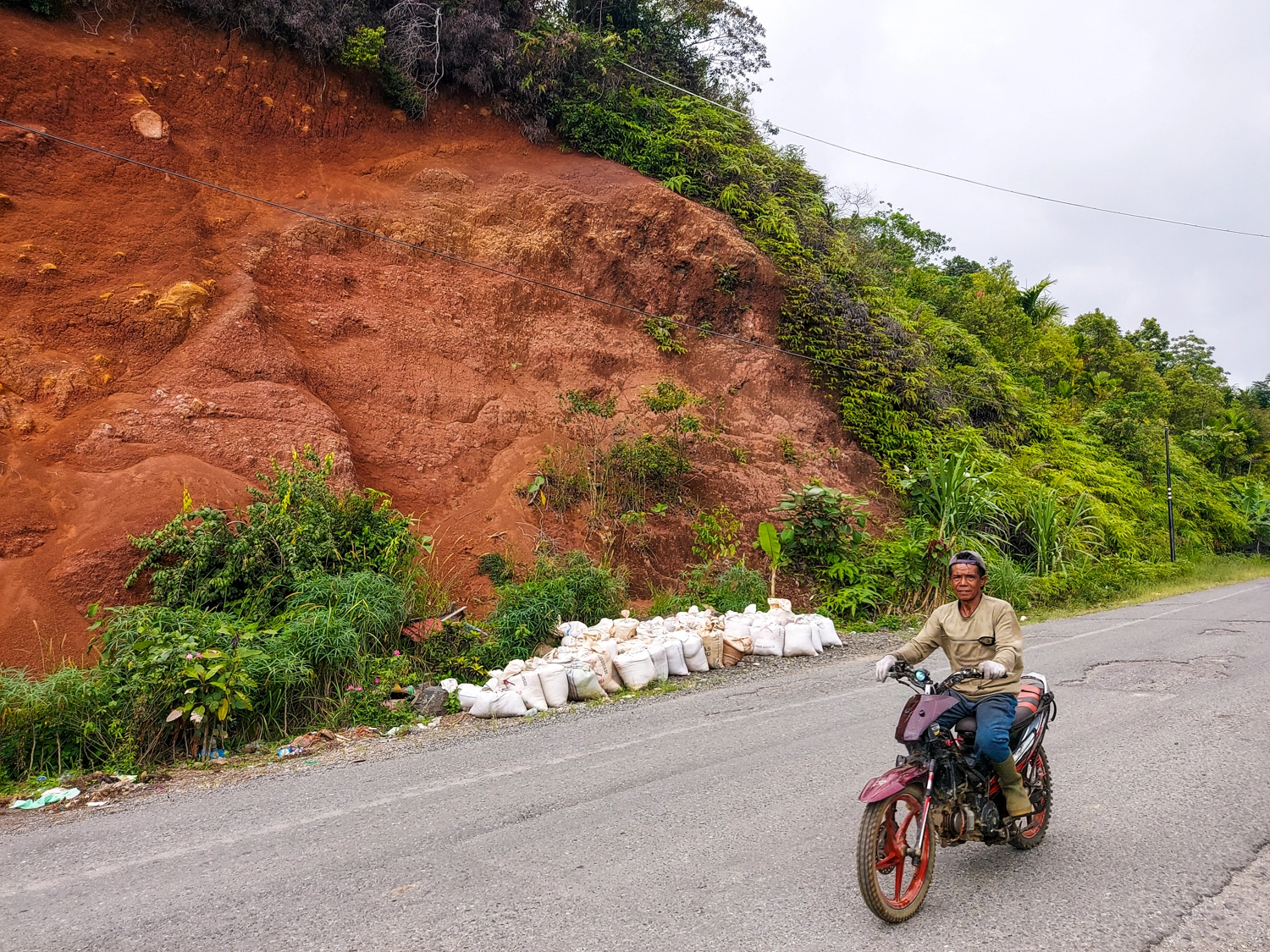
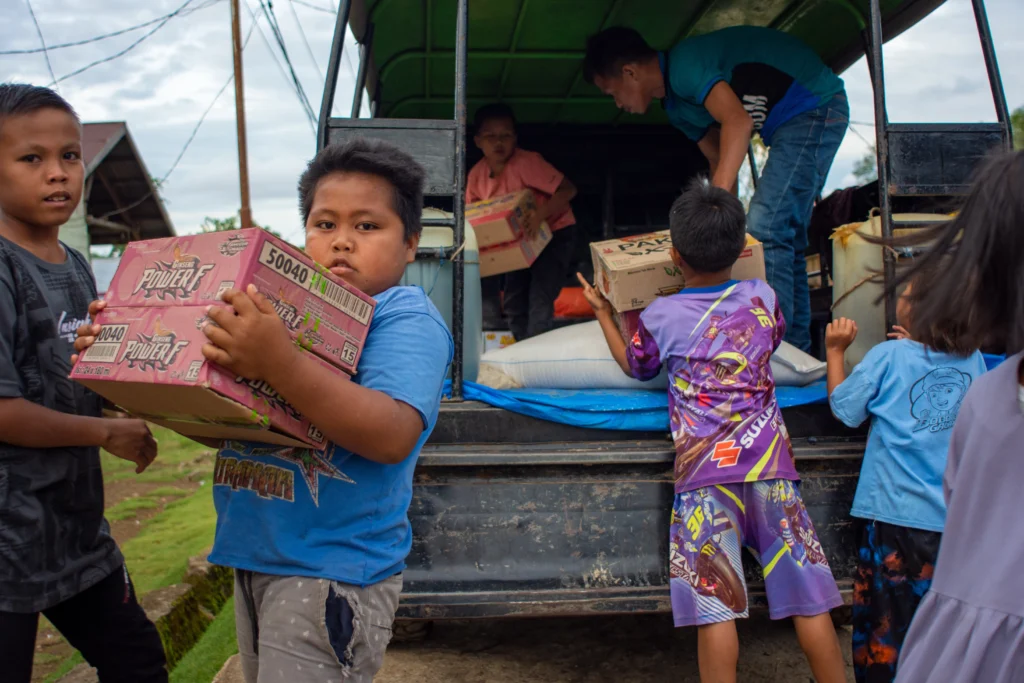
We need to remember that development as a shock does not necessarily manifest in the form of business ventures. Even the state infrastructural development can prove to be a shock to the community. When we came across the idea of Gon, or barter, in Papua, which we saw as a socially beneficial practice, community leaders from Soaib and Sawesuma mentioned that this was actually common practice in their villages as well. However, when their villages were later connected to road infrastructure and, consequently, cash society, barter was no longer relevant to them – thus reducing the chance to build a non-capitalistic economy is reduced to none. In Jambi, access to central markets not only pushes away their natural resources for sale, but also brings in packaged food and beverages that are considered ‘empty calories’. Instant food high in sugar and salt, such as bottled tea, instant noodles, and chips, triggered a dietary transition among children that brought health repercussions. From our interview, we found cases of child obesity due to the very dietary shift in Jambi.
Ecological shocks.
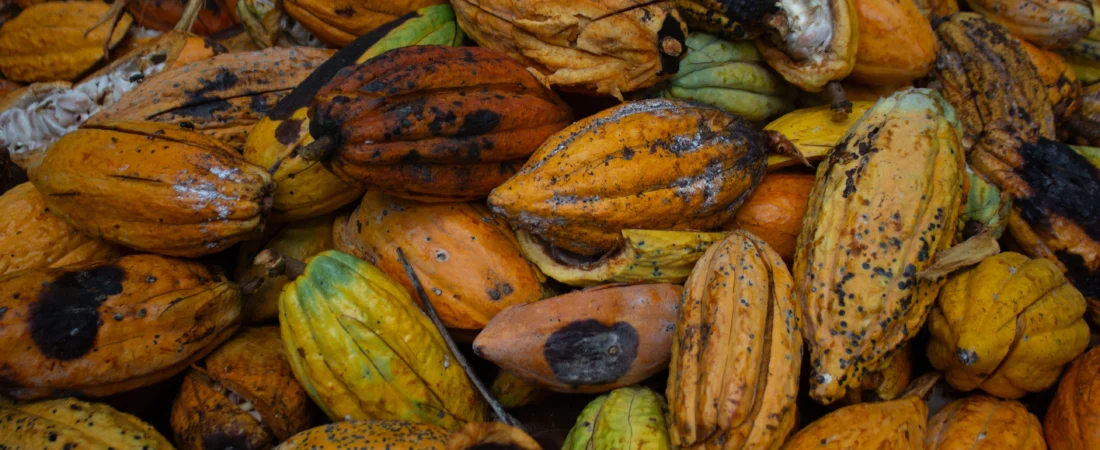
Climate change in its many guises – extreme weather, pest and disease outbreaks, crop failure, and decline in productivity – brings ecological shocks onto the six villages in Papua and Jambi. One example of this significant shock is the cocoa pest outbreak in Soaib that destroyed the majority of cocoa plantations and reduced farmers’ income significantly. One interviewee mentioned that “the future is now grim; it is not going to be the same as years ago”. In Jambi, there are small cases of coffee disease, but not as massive as the one in Papua.
What is worse is how other external factors (development, price, political change) exacerbated the ecological crisis experienced. In Jambi, climate change seems to relate to an increase in the number of pests (during the drier period) or diseases (during the wet one). However, it is the combination of the plummeting commodity price and skyrocketing production cost that altogether provide a real shock to the farmers. In Durian Rambun, before the 1990s, the population rarely knew any disturbances to their livelihood. Some did not even feel the 1998 Asian financial crisis which shook Indonesia to its core. However, when road access was opened and thus connecting Durian Rambun and Sungai Keradak to major cities and markets, a small increase in fossil fuel price all of a sudden became a major shock to them, affecting prices of consumer goods and agricultural inputs in the area. The 2004 crisis and failed government policy on forestry paved the way to major deforestation in the country, which was also badly felt by the communities in Jambi, creating conflicts and disputes.
In Aruswar and Sawesuma, the development of oil palm and concession relates strongly to ecological shocks that are felt, including the declining water budget and farther access to hunted game.
One informant even mentioned that the debilitating effect of pests on Soaib’s cocoa plantation also has something to do with a new variety of cocoa being introduced by the state, which triggered a collapse to the whole plantation.
Regeneration crisis.
Generational gap has become a common issue in Jambi and Papua. Elders often worried that the younger generation lost hope due to the burgeoning shocks that storm the villages. Another worried that children in Papua no longer like sago, which indicated that the local wisdom and practices of harvesting sago would soon disappear. When wi-fi signals entered Soaib, children became addicted to online games from their mobile phones. Because the electricity in the area only runs during the night, children are seen to play games or watch TikTok for hours, even until 4 in the morning, and thus skipped or slept during school classes. In Jambi, some of the adults are addicted to online gambling, which can be very detrimental to the household economy.
Most cultures in Indonesia are based on oral tradition, and so stories that are told from generation to generation are the one that holds the values and social-ecological systems intact. Parents or grandparents usually tell these stories in the morning or before bedtime. With the new technology, children are less interested in that kind of story-telling, and look instead to their cell phone. This phenomenon is widely shared by other rural communities in Indonesia.
Some of the younger adults are also lost amidst the fast-paced development. While we still normally see young farmers in Jambi, or youth in Papua working on some of the creative economy, some elders have lamented that there are now fewer youth that are willing to work on their farms. In Tamiai, people take pride in working in the city, or in one large hydroelectric dam construction nearby. Those that wear the company uniform are considered to be successful. Unfortunately, the very dam brings repercussions to the water availability in the surrounding areas.
Notwithstanding, we know that some of the younger generations have realized such an issue and work hard to counter the burgeoning effect of generational gap. The case of sago processing technology, or VCO, or orchidarium, or tourism, are all run by youth (those with age 40 and below). In Aruswar, Sawesuma, Durian Rambun and Sungai Keradak, the local leaders and village officials are youth, and they have pushed on many innovative progress and built respectful communication with their elders. The village secretary of Sungai Keradak, for instance, developed a tourism package in his village with group rafting across the nearby river. The head of Durian Rambun runs a more sustainable cinnamon harvesting and works closely with the adat leader to disseminate the idea of lubuk larangan to the younger generation.