
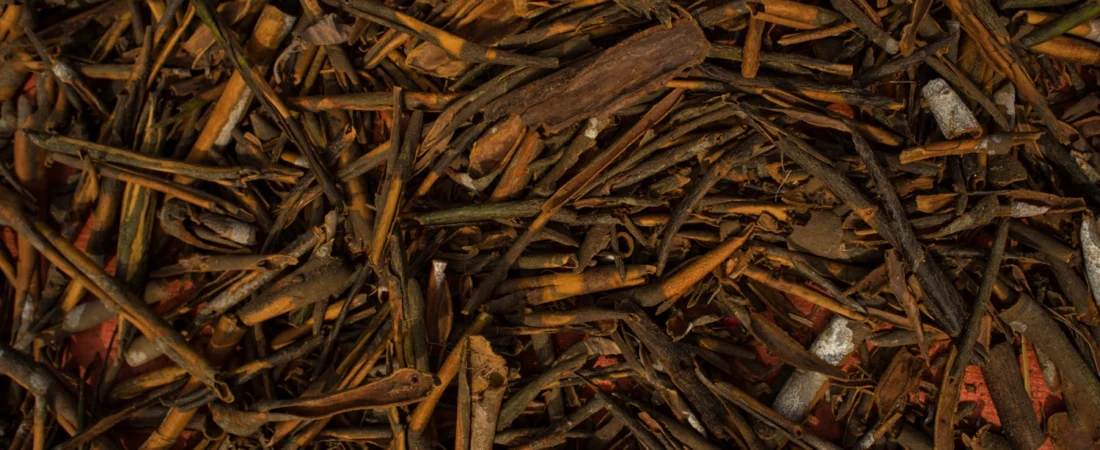
Cinnamon
Cinnamon is used as a long-term crop by the communities in the three villages in Jambi and is usually harvested after more than 6 years of age. Cinnamon began to be planted in Durian Rambun around the 1980s, while farmers in Sungai Keradak had only begun planting cinnamon in 1993 when the international price of cinnamon began to rise. Unfortunately, the pattern in cinnamon is rather similar to other industrial crops. During the 2000s, cinnamon prices started to drop, after which the farmers ceased to take care of the plant. Many cinnamon plantations in Tamiai were abandoned and people migrated to Malaysia to find employment. The price of cinnamon improved from 2010 up until now, which explains why people treat cinnamon mostly as savings as opposed to main crops like coffee and rubber. Rather than having a regular yield, cinnamon is usually harvested only when the owner is in urgent need of a large amount of money, such as for education and health. This is also supported by the fact that the older the cinnamon tree, the greater the yield.
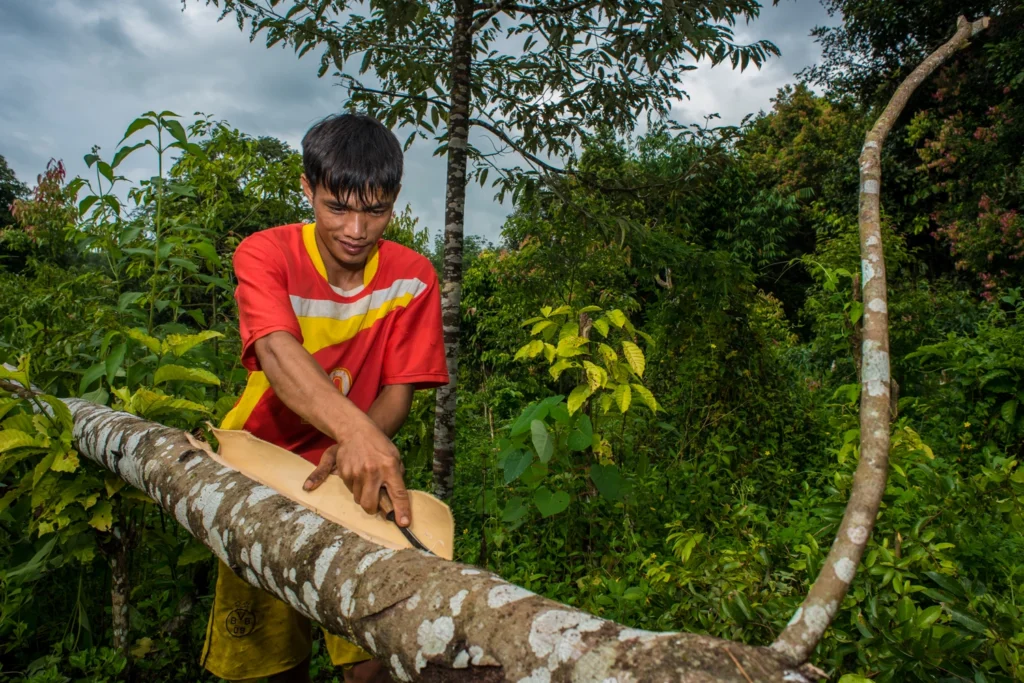
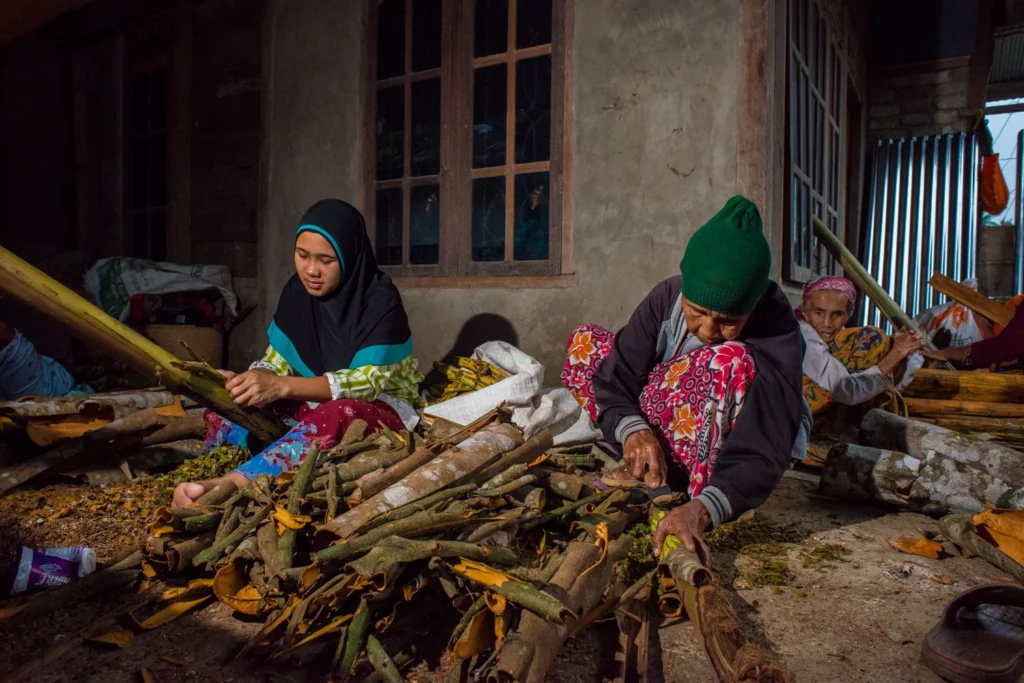
Unlike coffee and rubber, cinnamon harvesting is mainly done by male farmers in the village, as the work of harvesting is quite heavy and time-consuming. During the harvest, the cinnamon sticks are cut down and the bark peeled off. The skin will then be scraped to remove the outer layer of the stem and then dried in the sun, after which the roll-shaped skin will be sold to collectors. Cinnamon harvesting is paid with a wage system of Rp.2000/kg of clean/chipped yield.These daily farm workers work in groups of 4-10 people at a time.
Cinnamon sold to collectors is divided into several categories. In Tamiai, they are grouped into six different quality grades, namely KC, KB, KA, KS, KF and KM with a purchase price per kilogram from farmers at IDR 20,000, 40,000, 47,000, 52,000, 58,000, and IDR 65,000, respectively. The separation of these categories is based on the amount of skin, water and oil content. After being in the hands of collectors, the sweet peels will then be sorted again by collectors to be dried again and sold to large collectors or companies in Padang.