
Livelihood strategies depend not only on the resources available locally and the social collective values practiced, but also on the extent to which these communities and resources are connected to the broader market systems through both infrastructure and connectivity (Wiegand et al., 2017). Roads that connect villages in Papua with the nearest city or immigration area provide market access to people living in the village. Likewise in Jambi, villages that are closest to the main road access, namely the provincial road, provide opportunities for people to acquire more diverse and competitive market access. This connectivity provides opportunities for communities to diversify their sources of livelihood, although as a double-edged sword, this can also increase the exploitation of the natural resources that leads to ecological degradations.
The key, we argue, is a more equal flow of goods, capital and information between the villages and the wider networks. Proximity to markets does provide better access to better information (Serge et al, 2020), such as how people in Soaib have utilized machine-based technology to process sago, a more complex sawmill and logging system to process timber, as well as an easier access to cattle market for their new form of savings (as will be elaborated in this chapter). A better access to information means a better price for their products, such as shown in the case of timber in Papua, fish in Durian Rambun, and later in this chapter, in coffee and other industrial crops in Jambi. However, it also means the more knowledge and skills a community can gain from this flow of information. When compared between Soaib and the other two villages in Papua, knowledge of those in Soaib around timber or sago processing is apparently better. Here, we look at the goods and the bads of market access and complex value chains.
Local markets
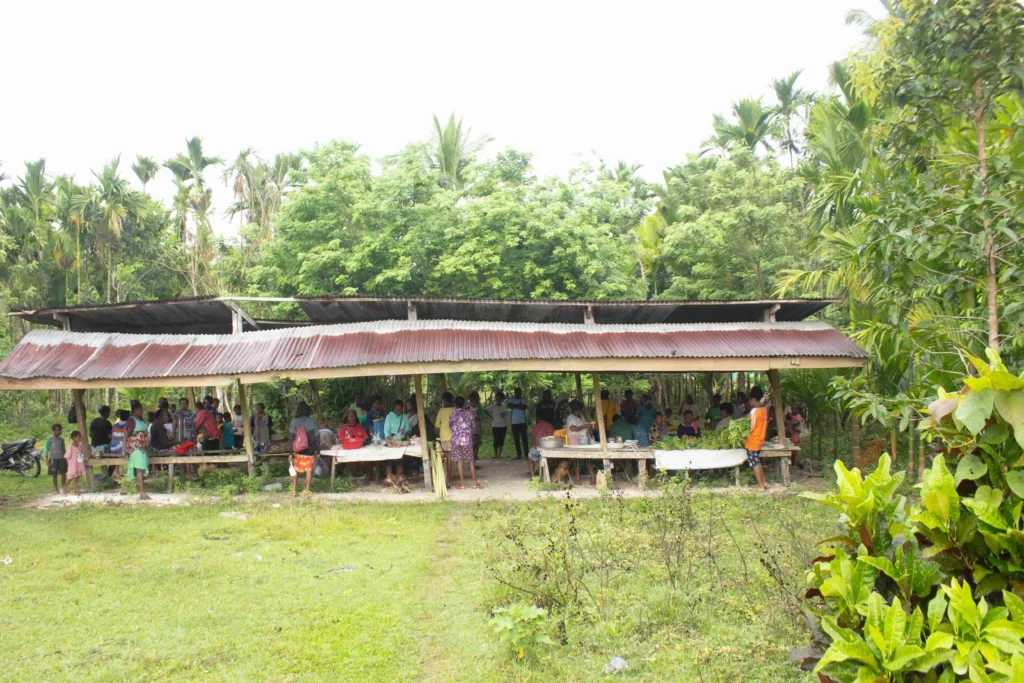
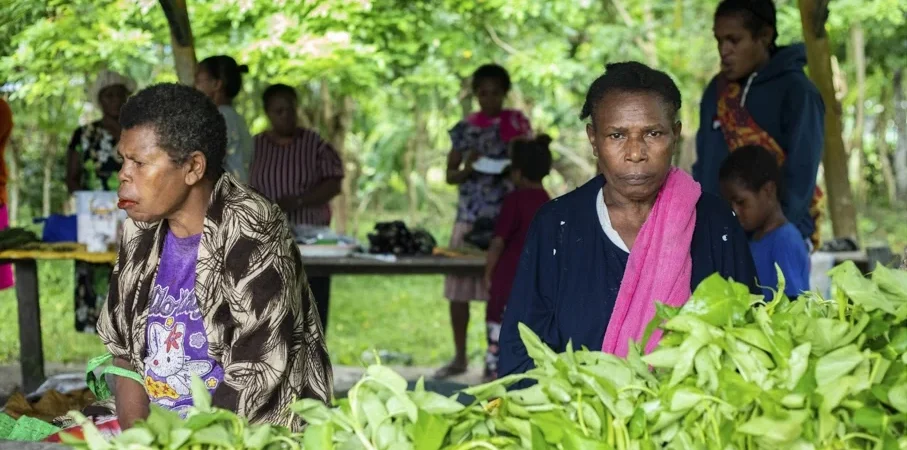
After new roadways connected the three villages to cities and development ensued a few decades ago, some of the subsistence livelihood strategies have undergone significant changes and transformations. Market seems to be one of the adaptations. In Soaib, for instance, a Saturday market opens for a short period of time (between 6am and 7am), which is visited by people from three villages around Soaib. This market sells produce from the local subsistence gardens. The proximity of Soaib to town has opened a new livelihood strategy, which is trading external consumer goods, from pillows to modern cakes. These people have also established kiosks or small grocery stores that sell a variety of necessities, including phone credit. People in Soaib also sell garden produce to the modern market in Sentani. The products they sell include sago, areca nut, coconut, and various types of vegetables. Likewise, people in Aruswar also sell their garden produce to the Sarmi market (the Regency Capital), using what is known as a stacking system. For example, cassava and petatas are sold for Rp 20,000 per pile, whereas bete and keladi for Rp 35,000 per pile. Likewise, the access road connecting Sawesuma with Bongo, an immigrant area, has introduced market access to the community and changed the way they build their livelihood – from subsistence to market oriented. In the three villages, the food they grow, gather and hunt are used primarily for their own consumption, but the surpluses are then delivered to the local markets. The money they gained can become quite lucrative; to illustrate, the prices of game meat are 25,000 rupiah per kg of pork and 45,000 rupiah for deer meat, where hunting experts can obtain up to 54 kg of game in one night of hunting.