
Coffee
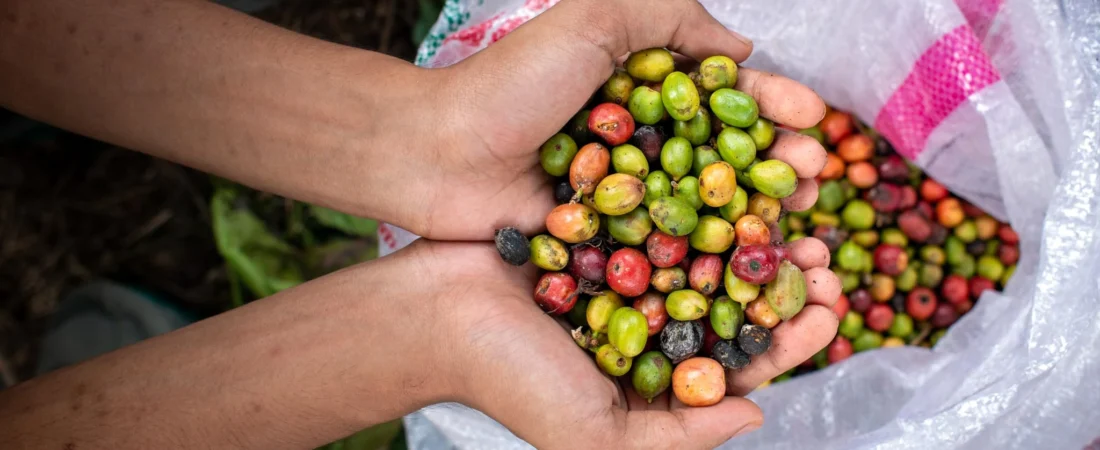
Coffee is an important cash crop for many farmers in Jambi, including in Durian Rambun, Sungai Keradak and Tamiai villages. Robusta Coffee began to be planted in Durian Rambun in 1997, brought by a resident who had lived in Nilo Dingin Village, Masurai Valley Sub-district. The success of coffee farmers from Nilo Dingin Village inspired people in Durian Rambun to grow coffee on their own. Meanwhile, in Sungai Keradak, coffee was only started to be planted in 2018, although according to our informant, coffee is still not economically profitable for some.
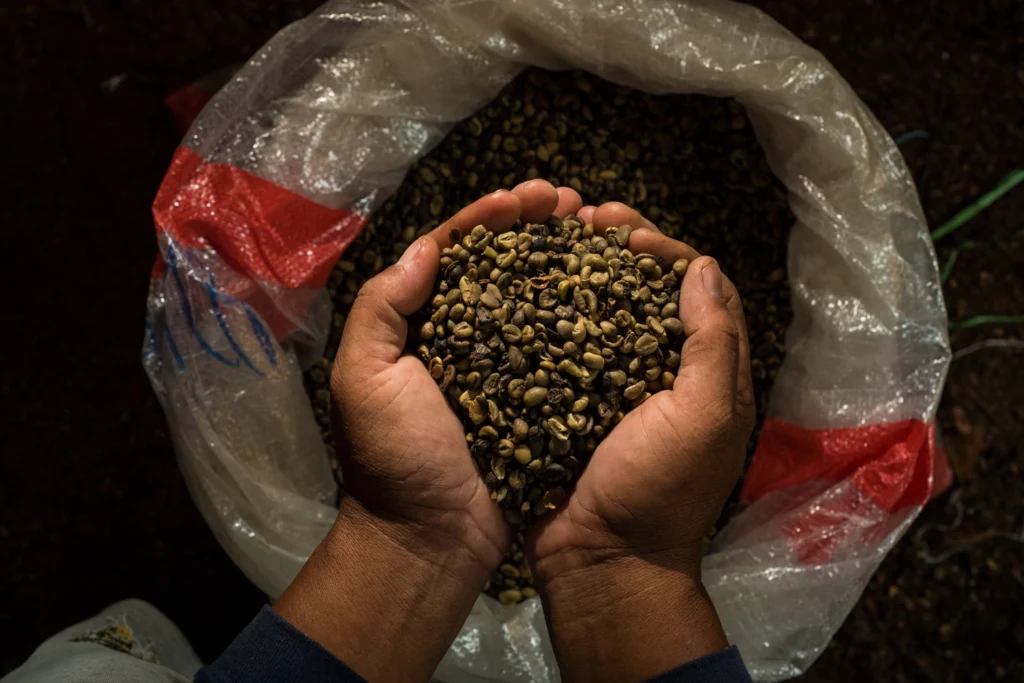
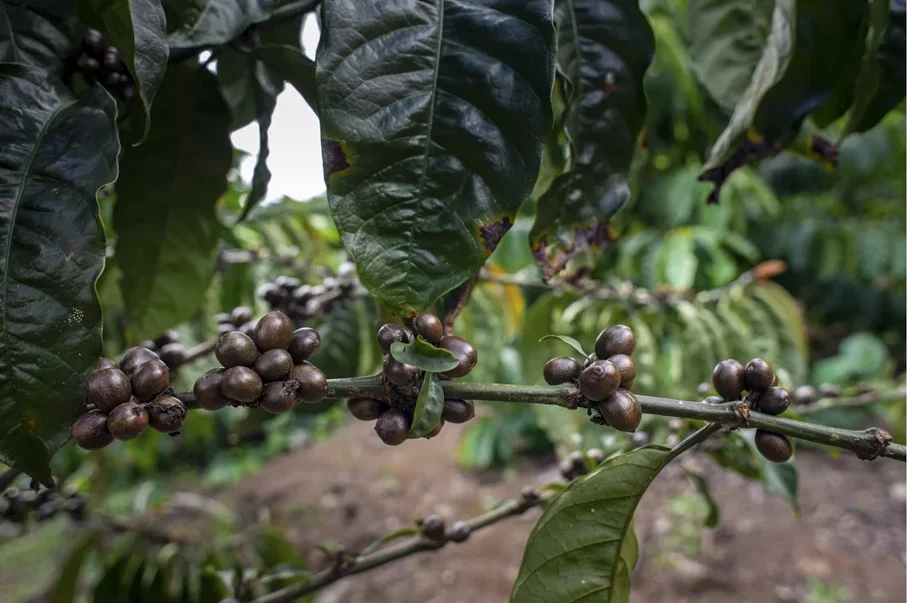
Crop harvesting is carried out throughout the fruiting season, usually divided into two periods, namely the intercalary season and the main harvest season. The difference between the two seasons can be quite surprising. One female farmer in Durian Rambun explained that during the intercalary harvest, her farm produces only eight 50-kg sacks of wet coffee beans, while during the main harvest, the coffee beans produced can reach up to 50 sacks. Coffee beans are generally sold to collectors in the village in the form of wet beans, dry beans and green beans. Farmers can sell their coffee harvest directly to the collectors without any processing after harvest, but the selling price of wet beans is usually lower. The reason why farmers sell wet beans is because they do not have time to dry the beans and they need money quickly. In Durian Rambun, coffee is sold in the form of green bean from farmers to village collectors (Tauke) at a price of Rp.18,000-Rp.21,000/kg, who will then sell to sub-district collectors at a price of Rp.22,000-Rp.23,000/kg. Meanwhile, in Tamiai, village tauke sells coffee directly to large collectors in Padang and Lampung.
In Durian Rambun and Tamiai, coffee beans are processed up to its final product of packaged coffee under the local brands. Nilo Kopi and Kopi Bueh, local coffee brands from Durian Rambun and Tamiai, respectively, are managed by forest farmers’ groups. Nilo Kopi is sold at Rp.20,000 for a 100 gram package and Rp.35,000 for a 200 gram package. The ground coffee was sold by the women’s group by dropping it off at shops or supermarkets in Bangko and Muara Siau. Kopi Bueh are usually sold online and also deposited in the cooperative at the KPH Limau Office in Sungai Penuh.