
Social structure of the three villages in Jambi
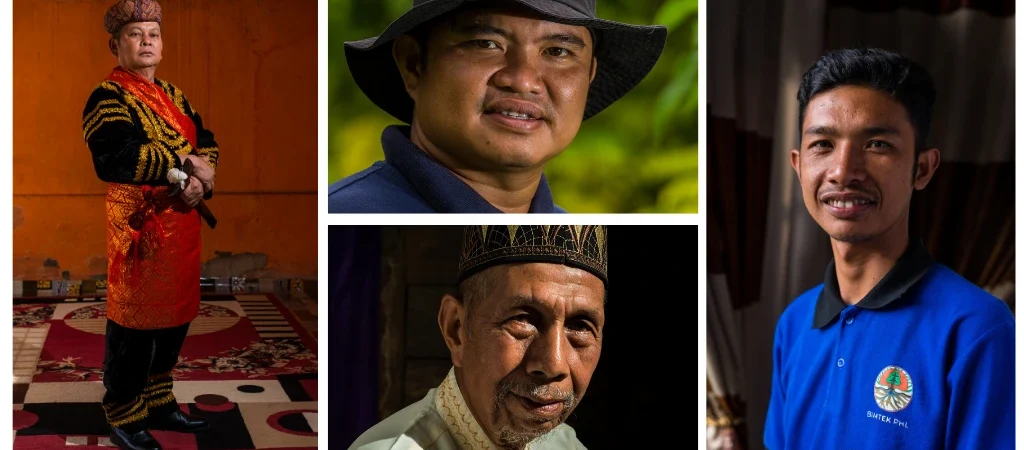
The social structure of the communities in the three villages in Jambi, i.e., Tamiai, Sungai Keradak, and Durian Rambun, is characterized by the important role of two institutions: the formal village institution and the non-formal adat institution. In the Kerinci community, there is a level of customary stakeholders called Sko Tigo Takah, which consists of Sko Depati, Sko Ninik Mamak, and Sko Tengganai (Ali, 2005). However, there are variations in how formal and informal institutions operate in everyday life. In Tamiai, the village is part of the customary territory of the Kedipatian Muara Langkap, which is headed by a customary leader called Dipati. Other customary titles in Kerinci include Datuk, Rio, Mangku, Patih, Manti Agung, Malano; all of which have specific roles and positions in the community (Ali, 2005). As such, adat institutions play an important role in the operation of the village government. In practice, adat cannot be separated from religion, so in addition to adat leaders there are also religious leaders who work to support each other. According to the statement of the adat leader, adat regulations originate from the teachings of Islam, so what is questioned by religious teachings is also regulated by adat. The function of adat institutions is to apply Islamic law to the community with customary sanctions that have existed since ancient times.
Adat leaders play a very large role in Tamiai Village, as all matters relating to village life must be decided with adat approval, including the election of the village head. One example is for residents who want to work in the hydropower development project to obtain permission and recommendations from adat first. In addition, permission and recommendations from adat also apply during village head elections because candidates for village heads must first be verified by adat institutions before they can run for village head. From the researcher’s observations, almost every day the house of the adat head is visited by many people, both for consultation needs, conflict resolution, marriage, and asking for job recommendations. Traditional leaders are very influential and respected people in the village.
Meanwhile, Sungai Keradak Village is one of seven villages included in the customary territory of the Batin Pengambang Clan, which according to community stories comes from the same ancestor. Each village that is part of the Marga Batin Pengambang has its own customary leader in charge of running the customs in the village. In Sungai Keradak, there is a “tali tigo sapilin’’ system, which means that the three figures in the village, namely adat, government and religion, cannot be separated from one another. The role of the adat leader is very important in regulating matters related to the interests of many people and regulating relationships between people in the village, whereas the village head is the person responsible for administration and governance. Another important figure is the religious leader, or syarak official. The syarak officials are in charge of keeping the teachings of Islam going in Sungai Keradak.
In running the village government, the village head must involve adat in it, because there is a customary system that applies in the village. Adat, on the other hand, cannot be separated from religion, so it requires religious leaders in every customary decision-making. Adat and religion are also inseparable from the village government, given that formally the highest government of the village is in the hands of the village head. These three elements must always work together in determining decisions that can have an impact on the lives of villagers.
As in Tamiai and Sungai Kradak, there are also two structures in place in Durian Rambun: a formal structure in the form of the village government and an informal structure in the form of adat. As a formal structure, the village government is led by the village head and assisted by village officials. The village government has the role of organizing all village affairs and activities in the formal realm. The role of the village head is highly respected in Durian Rambun. Furthermore, from the informal structure in the village of Durian Rambun, there are several figures, namely the head of adat and religious leaders. Adat in Durian Rambun village has a function to regulate the social life of the community, adat and government also work together to make regulations that apply in the village. Religious leaders are also well respected in Durian Rambun, or better known as syarak officials, who have a role to run and regulate religious life in Durian Rambun.
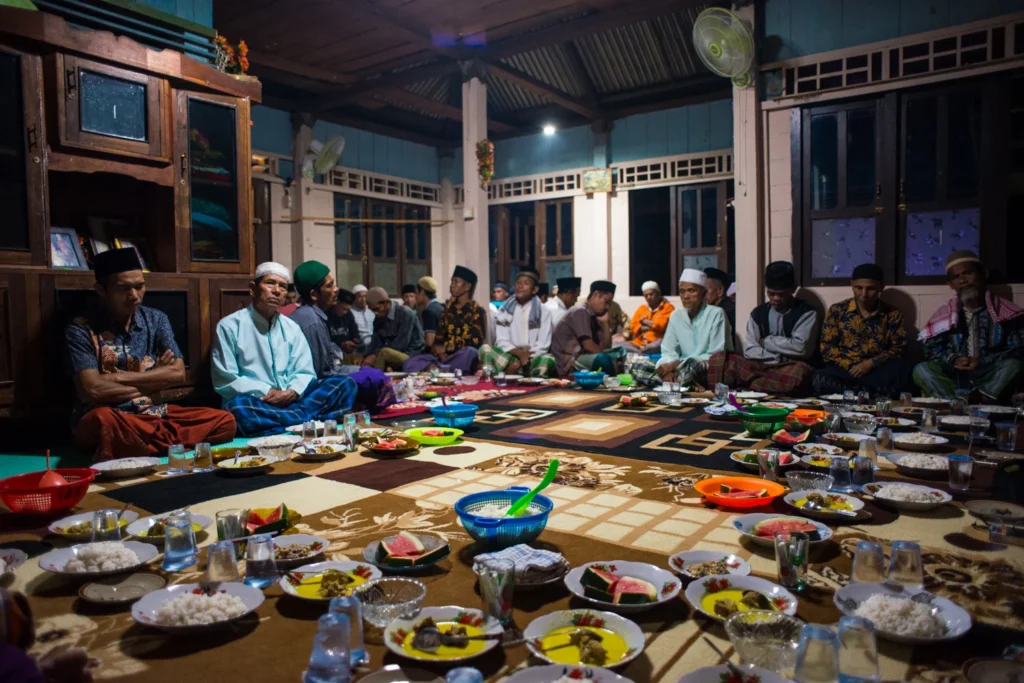
In Durian Rambun, the role of these three institutions cannot be separated from one another, the three institutions work together in making and determining policies that will be carried out in the village. Based on information from interviews with the customary head and village head, it illustrates that all village government decisions relating to community life in Durian Rambun are made with the approval of adat, which has a basis in Islamic teachings. In addition to these three institutions, there are also several community leaders such as cerdik pandai whose opinions are also heard by the community.
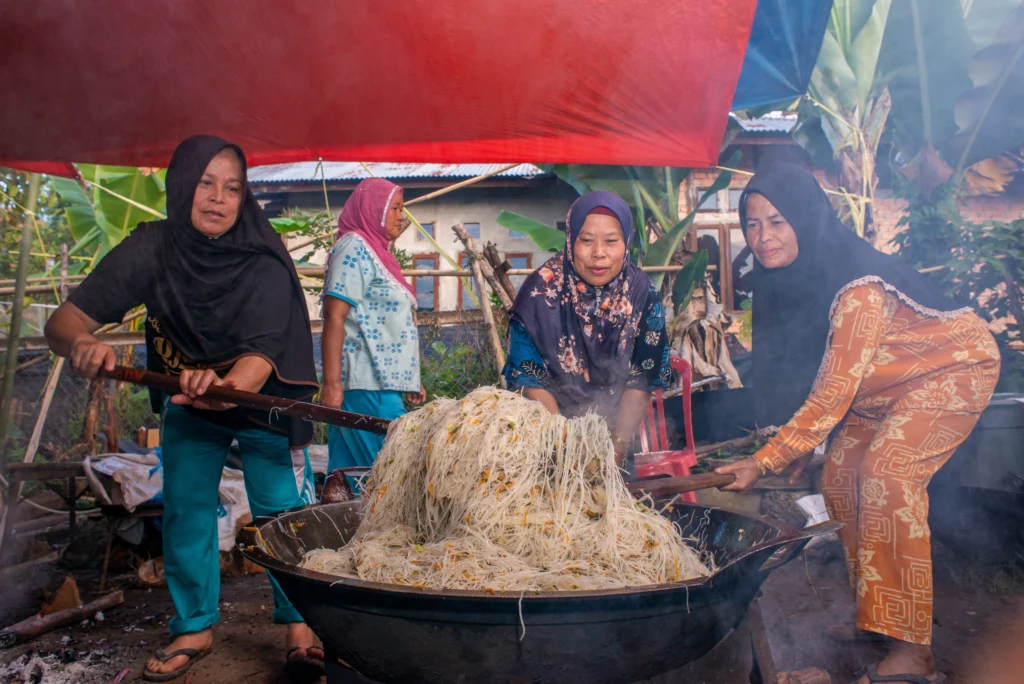
Based on our interviews, the community of Durian Rambun said that almost all people in the village are related to each other, because the population is not too large, and there are also few people who come from outside. This has influenced the relationships between people in the village due to their closely knitted kinship.
It is therefore safe to say that the social structure of the community in the three villages has a similar pattern in three important aspects. Firstly, there is a dualism of leadership that is characterized by the formal leadership of village institutions and informal, but socially binding, adat institutions. Secondly, there is a strong importance of religion (Islam) and the guiding role of syarak, which is inseparable from the adat itself. Thirdly, village, adat, and Islamic leaderships are tied together to form what is called a jali, which altogether builds into the stability of the social life in the three villages in Jambi.