
Social structure of the three villages in Papua
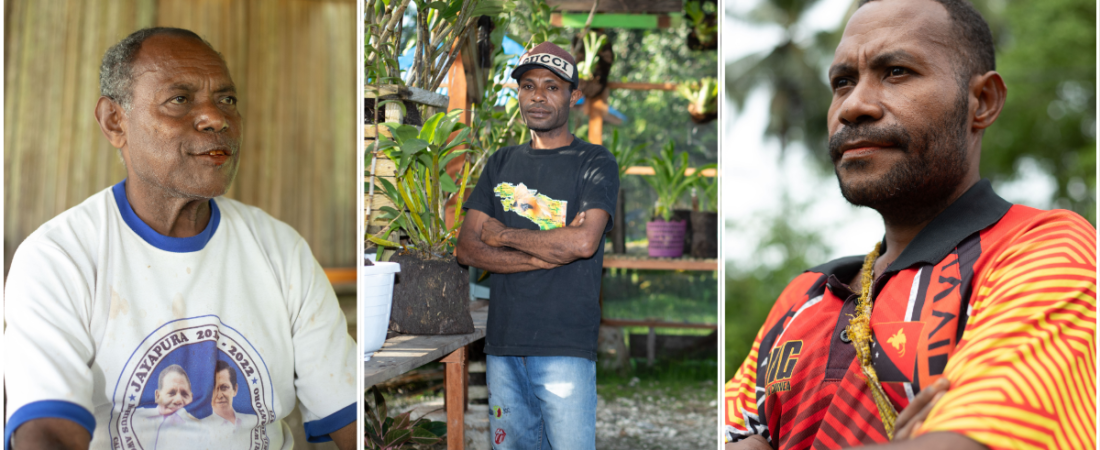
Understanding social structure and leadership in Papua is not as straightforward as it is with Jambi’s. Papua consists of many different tribes and clans, each with relatively a different leadership and social structure. It is therefore improbable to make a generalization of how the social system works in each village. One needs to look at the history of each village to really comprehend how leadership is built in the three different cases.
Culturally, the people of Aruswar are part of the Isirawa tribe, one of the five major tribes in Sarmi Regency, Papua Province. Aruswar Village, like the other 12 villages on the West Coast of Sarmi, was formed long before the introduction of the modern state, although at that time there were only a few households. The community in Soaib village is part of the Kemtuk tribe in the Grime Valley of Jayapura Regency. In general, the Kemtuk and Gresi people are indigenous people who inhabit the area around the Grime valley, along with the Nimboran tribe.
These three tribes are spread throughout the Grime valley area and the surrounding hills with clear boundaries of each tribe’s territory. According to the history of the village, it is known that in the past the three tribes departed to the east to cross the forests while surveying empty land that had never been occupied by people and claiming them as their customary rights. This continued until around 1950 during the Dutch administration, wherein the village of Soaib was formed administratively. On the other hand, the history of the community in Sawe Suma village is inseparable from the history of the Orya tribe. The Orya people in Sawe Suma village call themselves Sawe, which refers to the old village before moving and settling on the banks of the Suma river. Thus literally, Sawe Suma can be interpreted as a transfer settlement from Sawe to Suma.
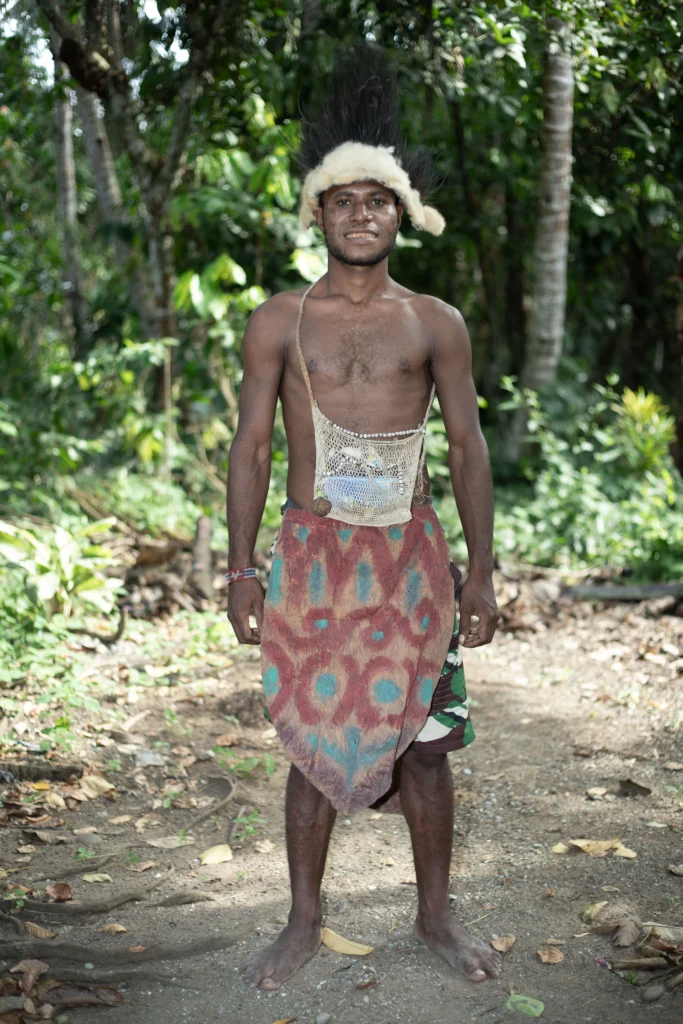
In accordance with the tradition of the customary leadership system that applies to the Isirawa community, a leader in Aruswar is generally called utete Utete is obtained by someone because he was born from the lineage of the customary leader. In the utete leadership system, there is no general division of power. The division of power in the Aruswar community occurs only between the chief and the head of the keret or clan, which is called Ureira. In relation to customary rights, the chief regulates the division of land/forest at the level of the keret, prepares land/forest reserves (communal), and resolves land problems at the level between keret or kampung.
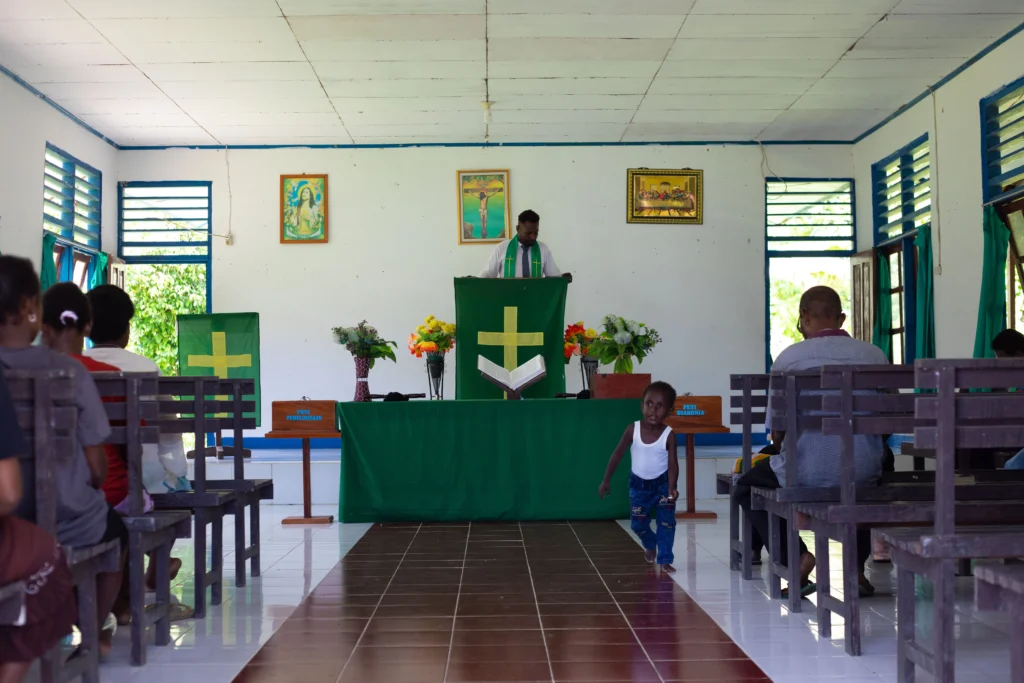
Likewise, the Orya tribe has traditionally only recognized the leadership system of the tribal chief. The Chief is the oldest person in the tribe or the one who knows about the history of origins, language, kinship relations, sacred places and others. He is the one who is usually appointed as a leader in the tribe. However, with the merger of two tribes in the Sawe Suma region, the structure of the Orya tribal leadership system has increased, namely the tribal chief and under him the current clan leaders, along with the Tua Adat representing the clan / family, then under him the clan / family members as a community.
Despite the differences in how leadership is run, there is one thing that binds the three villages in regard to forest-related collective value. In the culture of Papua, there is a parable where the forest is seen as mama (mother). For example, in the traditional knowledge system of the Isirawa/Sawere/Saveri ethnicity the forest is seen as mama/aike, who is seen to have carried her children for nine months, given birth, and raised and protected her children. Likewise, forest, for them, provides a place to live and various other needs of human life. Therefore, forests must be maintained, cared for, managed, and utilized properly. Doing the above is the same as caring for and protecting oneself.
The forest resources controlled by the keret in Aruswar are utilized and managed by the head of the clan, or Ureira. Land access will further be regulated by ownership, individually or per family within the clan. This ownership is based on the family in the clan that firstly opened the forest or land. Thus, in relation to control over the forest/land, there are private/family property rights and communal property rights within the clan.
Similarly, in Sawesuma, land ownership (okoma/lang), which includes forests and rivers (eit), sago hamlets (dobe ausu), and villages/settlements (ae) is always associated with the tribe. Each tribe/clan controls and owns an area whose boundaries are generally known and recognized by the surrounding community. Almost all residents, except small children, can indicate which tribe owns parts of the Sawesuma Village area. Tribal ownership areas are utilized as hunting grounds, gardens, and sago hamlets (dusun). In short, the Sawesuma village area is divided into hamlets owned by tribes, as in the case of Kiambe clan with their community logging.
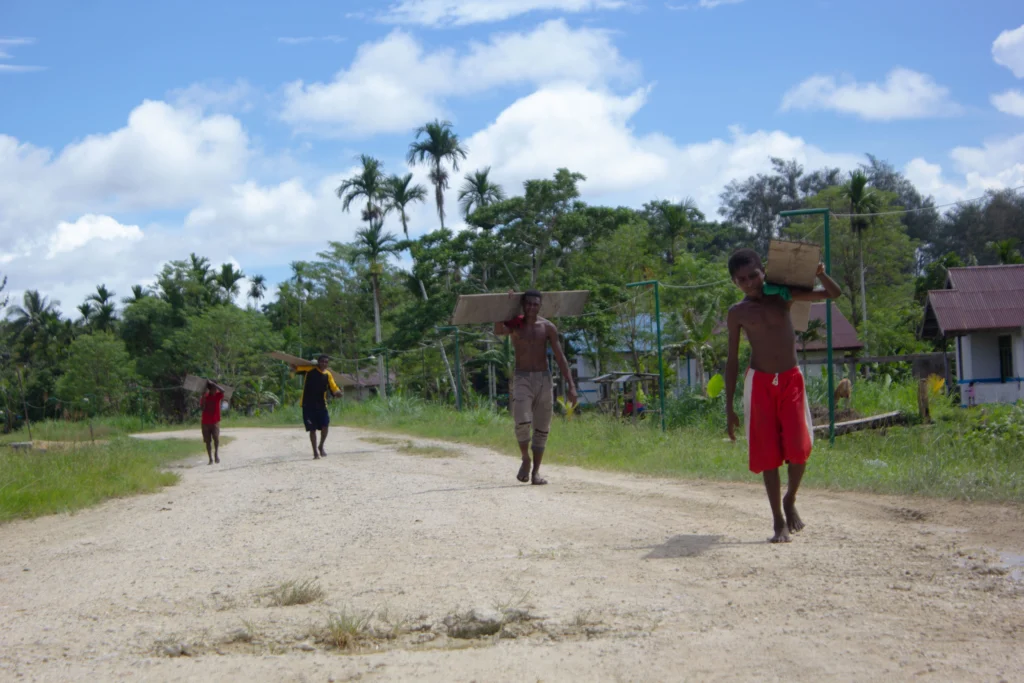
In both Jambi and Papua, social cohesion still manifests in a voluntary collective work called gotong royong. This can come in the form of constructing the house of a community member that needs help,cooking collectively during a neighbour’s wedding event, cleaning up river in a thanksgiving ceremony of a lubuk larangan, a rotary-system collective farm labour among women farmers’ group, and pooling money for someone in need. This form of social cohesion strengthens a community’s adaptation to future uncertainties.